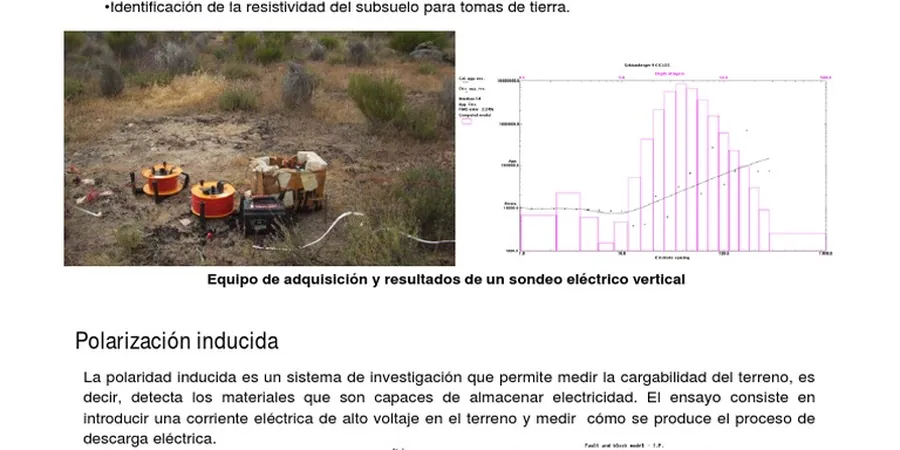
In Limerick, the ground is rarely straightforward. Beneath the topsoil you are almost always dealing with the Carboniferous limestone that underlies much of the Shannon basin, and with it comes the ever-present risk of solution features. We see it time and again on sites along the Dock Road or out past Castletroy: a borehole hits solid rock at three metres, then the next one drops into a clay-filled cavity at twelve. That is where a Vertical Electrical Sounding (VES) becomes more than just a box-ticking exercise. By running a series of expanding electrodes across a site, we build a resistivity profile that reveals the contrast between sound limestone, water-filled fissures, and soft infill material long before the excavator arrives. It is a cost-effective way to stitch together the gaps between your boreholes and build a proper ground model for the engineers.
Resistivity contrast between sound Shannon limestone and a water-filled cavity can exceed two orders of magnitude — that signal is hard to miss if the array is laid out correctly.