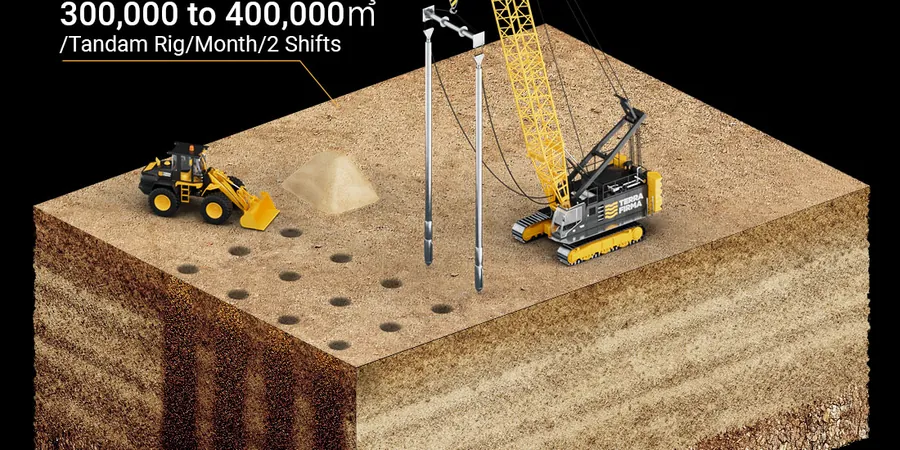
Limerick sits on the banks of the River Shannon and a lot of its expansion zones sit on soft alluvial deposits and estuarine silts. The city's 2050 development plan pushes for more riverside housing and commercial space, but building on compressible ground without treatment is a direct path to differential settlement claims. Vibrocompaction design changes that equation. We analyze the grain-size distribution from a sand cone density test and confirm that the in-situ material meets the fines content threshold before specifying a grid pattern that can densify the sand and silt layers. The result is ground that can support strip footings or a reinforced raft without the long-term creep that worries insurers. For Limerick's post-glacial drift geology, the right compaction array turns marginal land into buildable plots within weeks, not months.
Compaction depth is limited only by the crane capacity and the probe length. We routinely reach 15 meters in Shannon alluvium.