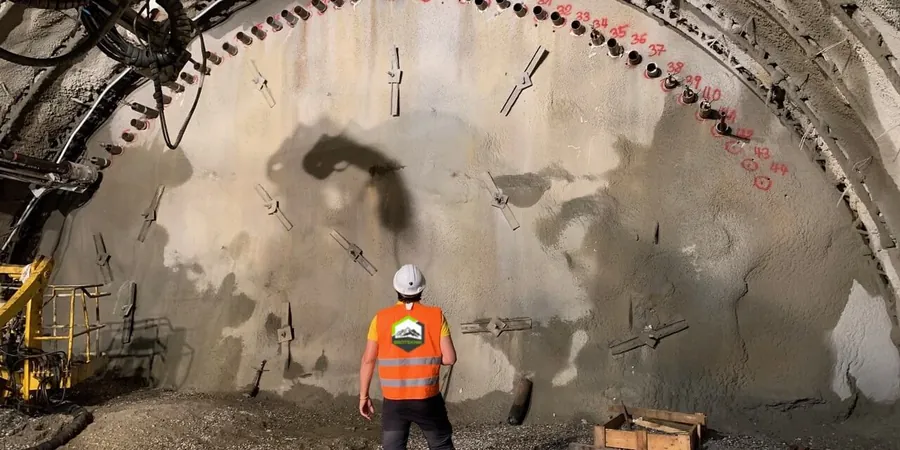
The ground under Limerick changes fast when you move from the medieval core of King’s Island toward the alluvial flats of the Dock Road. One side gives you stiff glacial till at three metres; the other gives you soft estuarine silts that keep deforming for weeks after you cut. That contrast is why every excavation project here needs a monitoring plan that starts before the first bucket hits the dirt. The River Shannon’s tidal influence pushes groundwater levels up and down daily, and the layered soils beneath the city — from the limestone bedrock at roughly 12–15 m depth up through the boulder clay — react differently depending on the cut depth and the dewatering method. Our geotechnical excavation monitoring service puts inclinometers, standpipe piezometers, and surface settlement points into the ground and reads them on a schedule that matches the actual risk, not a generic checklist. When we work near the Abbey River or inside the old city walls, we often pair the monitoring array with a deep excavation instrumentation plan that accounts for adjacent historic structures, and we cross‑check lateral movements with slope stability analysis where retaining systems tie into natural ground.
Monitoring is not about collecting numbers — it is about catching the trend before the trend becomes a problem.